
📋 Table of Contents
What Deep Work Actually Is (and Why It’s Rare)
Deep work is professional activity performed in a state of distraction-free concentration that pushes your cognitive capabilities to their limit. It is the kind of work that creates real value, improves your skills, and produces output that is hard to replicate. It is rare because the modern work environment — both office and remote — is structurally hostile to it. Email, Slack, social media, and the general culture of constant availability have trained most knowledge workers to operate in a permanent state of shallow, reactive work. The result is days that feel busy but produce little of lasting value. The research on this is clear. Gloria Mark at UC Irvine found that it takes an average of 23 minutes to return to full focus after an interruption. That means a single Slack notification in the middle of a concentrated work session doesn’t cost you 30 seconds — it costs you most of the next half hour.Deep work is not about working longer or harder. It is about protecting specific blocks of time from the constant low-grade interruptions that fragment concentration and prevent genuinely difficult work from getting done.
The Four Enemies of Focus at Home
Remote workers face a specific set of focus-disrupting forces that are different from office environments. Understanding them is the first step to neutralizing them.Enemy 1: The Always-On Communication Culture
Most remote teams operate with an implicit expectation of near-instant response to messages. This creates a constant background anxiety — the sense that you should always be checking — that makes sustained concentration nearly impossible. Every few minutes, the pull to check the inbox or messaging app breaks your focus thread, even if you don’t act on it.Enemy 2: The Absence of Social Accountability
In an office, there is ambient social pressure to appear focused and productive. At home, that pressure disappears. This is mostly positive — it eliminates performative busyness — but it also removes a low-effort focusing mechanism. Without replacing it deliberately, many remote workers find themselves drifting more than they expected.Enemy 3: The Undifferentiated Environment
When you live and work in the same space, your brain receives no environmental signal that distinguishes focus time from leisure time. The sofa where you relax in the evening is in the same room as your desk. This ambiguity makes it harder for your brain to enter a focused state on demand.Enemy 4: The Myth of Multitasking
Many remote workers attempt to stay responsive to communications while doing focused work simultaneously. The research on this is conclusive: the human brain does not multitask. It switches rapidly between tasks, and each switch carries a cognitive cost. Attempting to monitor Slack while doing complex analytical work means doing neither well.Checking your phone during a deep work block — even briefly — effectively ends that deep work block. The mental context needed to return to genuinely deep concentration takes many minutes to rebuild, not seconds.
Designing Your Deep Work Blocks
The most effective approach to deep work is not trying to be focused all day. It is protecting specific, defined blocks of time for concentrated work and being honest about the rest.How long should deep work blocks be?
For most people, 90 minutes is the natural unit of focused work. This aligns with the brain’s ultradian rhythm — a roughly 90-minute cycle of higher and lower cognitive arousal that repeats throughout the day. Working with this rhythm rather than against it means scheduling focused blocks of 90 minutes and accepting that genuine rest is required between them. If 90 minutes feels unachievable, start with 45 minutes. Build the capacity gradually. The goal is to extend your ability to sustain focus, which improves with deliberate practice like any other skill.When should you schedule deep work?
Most people have a natural peak performance window — typically in the late morning for early risers, or midday for night owls. Track your energy and focus quality across different times of day for one week, and identify your two- to three-hour peak window. Schedule your most cognitively demanding deep work in that window without exception.How many deep work blocks per day?
Two to three 90-minute blocks per day is the realistic upper limit for most people when done at full intensity. Four hours of genuine deep work consistently produces more valuable output than eight hours of fragmented shallow work.Time-block your deep work sessions on your calendar the night before. Treat them as non-negotiable appointments. If a meeting request conflicts with your scheduled deep work block, decline or reschedule the meeting — not the deep work.
Your Workspace Setup for Maximum Focus
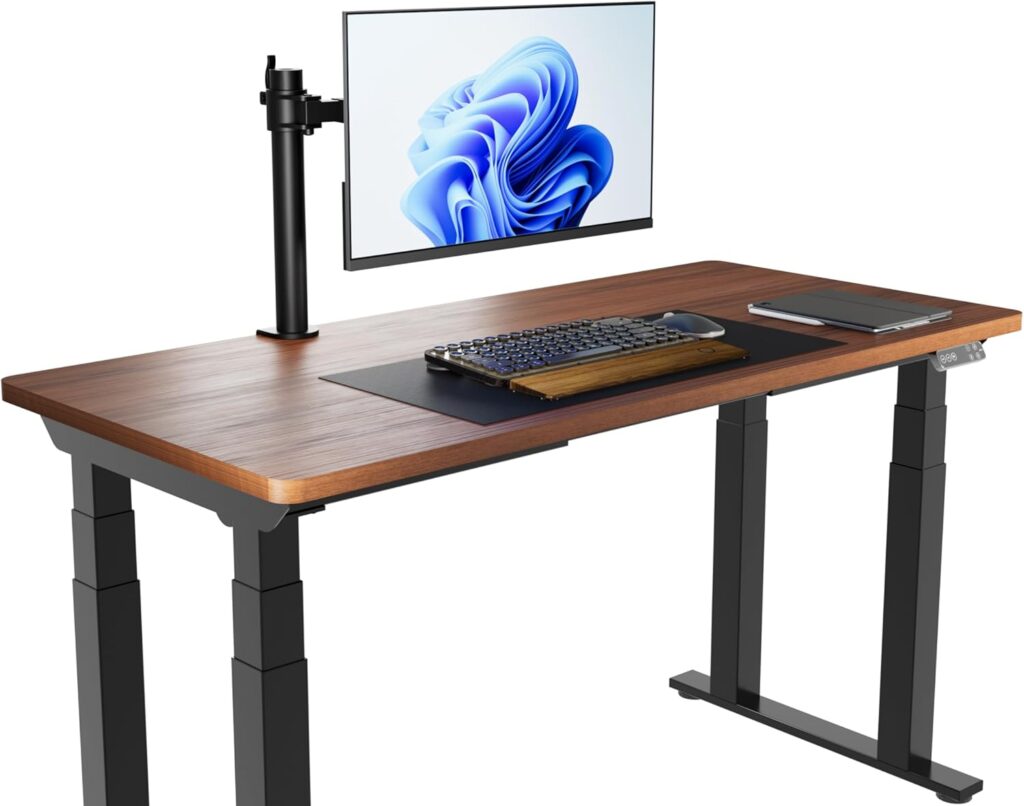
Your physical environment sends constant signals to your brain about what mode you should be in. A workspace deliberately designed for focus makes entering a concentrated state easier and holding it longer more natural.The dedicated deep work zone:
If possible, designate a specific physical location — or at minimum a specific configuration of your desk — that is exclusively used for deep work. Your brain will begin to associate that physical context with concentrated focus. Over time, sitting down in that space will trigger a focused state more quickly, because you have trained that association deliberately.Eliminate visual distractions:
- Clear your desk of everything not needed for the current task before starting a deep work block
- Face away from high-traffic areas of your home if possible
- Close unnecessary browser tabs and applications before beginning
- If you have a second monitor, consider turning it off during deep work to reduce the temptation to multitask
Manage auditory distractions:
Noise is one of the most common deep work disruptors at home. Options in order of effectiveness:- Active noise-canceling headphones are the single most impactful purchase for remote workers in noisy environments. They eliminate unpredictable background noise that constantly triggers your attention system.
- White, pink, or brown noise masks variable environmental sounds. Many people find brown noise particularly effective for sustained concentration.
- Music without lyrics — instrumental, classical, or ambient — can support focus for many people without the distraction of processing language.
Digital Discipline: Taming Your Tools
The most important behavioral change for deep work is not a productivity system or a morning routine. It is notification management. Every notification your devices can generate should be evaluated and most should be permanently disabled.| Tool | Deep Work Setting | Check Schedule |
|---|---|---|
| All notifications off | 3x per day at fixed times | |
| Slack / Teams | Do Not Disturb on | End of each deep work block |
| Phone | Face down, silent, or in another room | After each deep work block |
| Browser | Close all non-essential tabs | Open only what the task requires |
| Calendar | Deep work blocks marked as Busy | Check once the night before |
Website and app blockers:
For many people, willpower is not a reliable mechanism for avoiding distracting websites during deep work. Using a website blocker that makes distracting sites temporarily inaccessible removes the need for willpower entirely. Tools like Freedom, Cold Turkey, or built-in Screen Time features work well. Set them to activate automatically at the start of your scheduled deep work blocks.The most effective digital discipline strategy is structural, not motivational. Do not try to resist checking your phone by being more disciplined. Put your phone in another room. Remove the friction of focus and add friction to distraction.
Building the Habit That Sticks
Deep work is a skill that degrades without practice and improves with consistent application. The challenge for most people is not understanding the principles — it is building the habit so that deep work becomes the default rather than the exception.Start smaller than you think you need to:
If you currently work in a state of near-constant distraction, jumping to three 90-minute deep work blocks per day will likely fail. Start with one 45-minute block per day for two weeks. Make that block reliable before extending it. Success builds the motivation and confidence to extend the practice.Track your deep work hours:
Simple tracking creates accountability. Keep a log of how many hours of genuine deep work you complete each day. Most people are shocked to discover the number is one hour or less. Seeing that number — and watching it grow — is a powerful motivator.Establish a shutdown ritual:
Ending your workday with a defined shutdown ritual signals to your brain that work is complete and recovery can begin. This is not just psychologically useful — it is the foundation of sustainable deep work. Chronic overwork without genuine recovery leads to declining performance in deep work sessions within weeks.- Schedule one deep work block for tomorrow before closing your computer
- All notifications disabled during deep work blocks
- Phone out of sight and reach during focused sessions
- Dedicated deep work location established and kept clear
- Communication response schedule set and shared with team
- Website blocker configured and tested
- Shutdown ritual defined and practiced daily
- Deep work hours tracked daily
The remote workers who consistently outperform their peers are not the ones who work the longest hours. They are the ones who protect the conditions for focused, high-quality work with the same seriousness they bring to the work itself.
Build the workspace that makes deep work easier every single day.
See Our Ultimate Desk Setup Guide →